Research
An established program with an open trajectory
An established program with an open trajectory
My research examines how people inhabit, judge, sustain, and contest consequential institutions when fulfillment cannot be presumed. Publics may distrust officials yet continue to seek their recognition, condemn scandal while depending on implicated institutions, or remain in academic life despite exclusion. I study how communication gives these relationships meaning and shapes their consequences. Human flourishing and human suffering orient the inquiry: endurance is a phenomenon to explain and evaluate, rather than an achievement to celebrate automatically.
The Philippines is the principal site of theory generation, with selective comparison across Southeast Asia. Institutional nonfulfillment identifies the recurring gap between expected protection, care, accountability, recognition, or participation and lived experience. It directs inquiry; it is not a universal explanation. Three streams organize the present program while leaving its questions open to revision through empirical work and institutional participation.
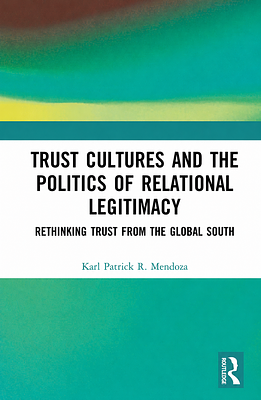
Trust Cultures and the Politics of Relational Legitimacy: Rethinking Trust from the Global South
Forthcoming from Routledge, 1 December 2026. A book on trust cultures and relational legitimacy from the Global South; see the dedicated book page for details.
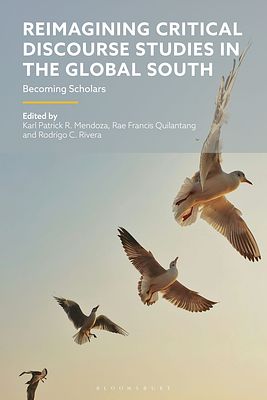
Reimagining Critical Discourse Studies in the Global South: Becoming Scholars
Edited volume with Rae Francis Quilantang and Rodrigo C. Rivera. Final revised manuscript submitted and acknowledged by Bloomsbury Academic on 30 September 2026, following positive peer review; publisher processing pending.

This stream asks how relationships with authority are sustained, revised, contested, or withdrawn under imperfect trust. Trust cultures are the “meso-level repertoires through which patterned expectations about authority become socially organized.”1 It does not presume that a nation shares one homogeneous trust culture. Relational legitimacy is “the evaluative process through which publics negotiate whether authority remains morally recognizable and socially bearable under concrete conditions of uncertainty,”2 worked out in concrete encounters with officials and institutions.
Navigating Trust, Journalism, and Health in the Age of Populism: The Dengvaxia Vaccine Scandal in the Philippines (Routledge, 2025) establishes this inquiry through the Dengvaxia controversy. Trust Cultures and the Politics of Relational Legitimacy: Rethinking Trust from the Global South (Routledge, in press) consolidates it. The published Pasig City study, Everyday legitimacy in reformist governance: Trust cultures and the relational politics of authority in Pasig City, extends the empirical problem to reformist local governance, showing how authority is encountered through presence, fairness, care, and culturally available expectations.
This stream asks how alleged wrongdoing becomes publicly consequential and why exposure can coexist with incomplete correction. Scandal constructivation names the contested process “wherein truth, blame, and legitimacy are performed and interpreted through culturally specific frameworks of trust.”3 Research on vernacular judgment and news engagement examines how skepticism and dependence coexist, and how unresolved controversies enter later evaluations.
Repair without correction: Institutional authority and enduring controversy in communication, in press in Journalism & Communication Monographs, compares Dengvaxia in the Philippines with Vaksin Nusantara in Indonesia. It develops a bounded explanation of continuing authority amid incomplete correction. Scandal Worlds: Constructivation, Ambivalent Governance, and Political Legitimacy in the Global South remains under contract with Anthem Press, with delivery scheduled for July 2028. It addresses scandal’s cumulative public life and is currently paused for empirical development, rather than being treated as an immediate writing commitment.
The third stream examines how universities, evaluative cultures, technologies, and relationships enable or constrain meaningful participation in knowledge production. Published work in Disability & Society, Qualitative Research Journal, Journal of Academic Ethics, Discourse & Communication, and Journal of Multicultural Discourses connects neurodivergent scholarship, AI assistance, researcher formation, and the social authorization of critique.
Cognitive scaffolding makes visible the supports through which scholarly work becomes possible. The question is how these supports affect agency, judgment, and recognition in particular settings. Scaffolding the Self: Neurodivergence and the Moral Life of Academic Work is a completed book manuscript seeking a new publisher. Reimagining Critical Discourse Studies in the Global South: Becoming Scholars, co-edited with Rae Francis Quilantang and Rodrigo C. Rivera, has a final revised manuscript submitted to and acknowledged by Bloomsbury Academic on September 30, 2026, following positive peer review; publisher package checking and production instructions remain pending. These projects develop the conditions of inquiry as an institutional problem without turning the program into a general agenda on AI or higher education.
Book projects → · Publications · Accepted and forthcoming · Research enquiries
Seven concepts make up the program's public vocabulary: trust cultures, relational legitimacy, scandal constructivation, ambivalent governance, repair without correction, accrued damage, and cognitive fragility. Each is defined in plain words, with a link to the publication where it is defined.